Where the Line Ends, the Feeling Begins: Mastering the Art of the Poetic Break
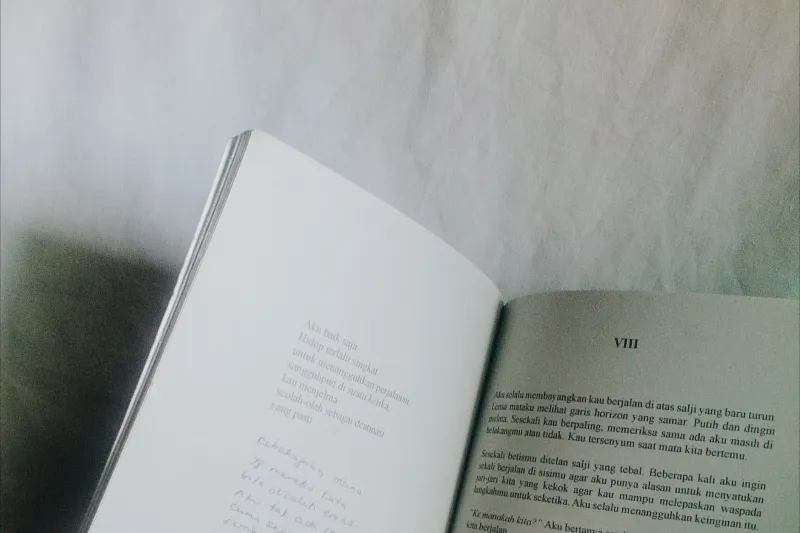
There is a moment, familiar to any devoted reader of poetry, when a line ends unexpectedly — not because the sentence is finished, but because the poet has decided that this particular pause will cost you something. You lean forward. You catch your breath. You turn the corner of the line and find the world slightly rearranged. That experience is not accidental. It is architecture.
The line break is one of poetry's most underappreciated technical instruments, a mechanism so embedded in the form that readers often absorb its effects without recognizing the craft behind them. Yet for poets working across languages — navigating syntax structures that behave nothing like English, carrying line-ending traditions from Arabic, Japanese, Spanish, or Yoruba — the line break becomes a site of extraordinary creative negotiation. It is, in many senses, where the poem breathes.
The Break as Breath
Before it is anything else, the line break is a respiratory instruction. When a poet ends a line, they are telling the reader — consciously or not — to pause. In oral traditions, this pause is literal: performers at poetry slams across American cities instinctively honor the line's edge with a fractional silence, a held note before the next phrase arrives. In written poetry, the white space to the right of a broken line performs the same function on the page.
Consider how differently English and Spanish syntax accommodate breath. English, with its relatively fixed subject-verb-object structure, creates natural line-ending opportunities at syntactic seams. Spanish, with its flexible word order and longer, more elaborate clause structures, invites poets to break mid-phrase in ways that generate productive disorientation. Contemporary bilingual poets such as Ada Limón — whose work moves fluidly between English and Spanish sensibilities — have spoken about the way each language offers different "landing places" for the breath, and how choosing where to end a line is inseparable from choosing what the poem feels like in the body.
That embodied quality matters. Poetry, unlike prose, is always in conversation with the physical act of reading. The line break slows the reader down, makes them conscious of duration, and transforms what might otherwise be a smooth semantic flow into something rhythmically textured.
Suspense, Surprise, and the Enjambed Line
Of the many techniques available to poets, enjambment — the continuation of a sentence or phrase beyond the end of a line without a pause — is perhaps the most versatile tool for generating suspense. When a line breaks mid-thought, the reader is suspended between what has been said and what is about to be said, occupying a liminal space that carries its own emotional charge.
The Nigerian-American poet Chinaka Hodge, whose work has been celebrated for its percussive energy and political clarity, frequently uses enjambment to create what might be called a "deferred revelation" — the line appears to be going in one direction until the turn arrives and recontextualizes everything that came before it. This technique has deep roots in the Western canon, from John Keats to Gwendolyn Brooks, but it takes on distinct qualities when practiced by poets whose linguistic heritage includes traditions that do not share English's line-ending conventions.
In Japanese poetry, the concept of ma — the meaningful pause or negative space between events — informs how contemporary Japanese-American poets think about white space. The silence after a line is not emptiness; it is presence. Poets such as Kimiko Hahn have described the influence of this sensibility on their English-language work, noting that the line break becomes a way of honoring what cannot be said as much as what can.
Caesura: The Break Within the Line
If enjambment operates at the line's end, caesura — the deliberate pause within a line — operates at its heart. Derived from Latin prosody and formalized in classical verse traditions, the caesura creates a moment of interior silence that divides a line into weighted halves. Its effects range from the meditative to the dramatic, depending on placement and context.
In Arabic poetry, the concept of the qafiya and the structured pause between hemistichs has shaped a line-break sensibility that prizes symmetry and internal balance. Arab-American poets working in English often carry this structural instinct into their adopted language, creating lines that feel architecturally balanced in ways that differ subtly from the dominant Anglo-American free verse tradition. The result is a kind of rhythmic signature — a pacing that reflects multiple inheritances simultaneously.
For readers accustomed to consuming poetry quickly, the caesura demands a different kind of attention. It insists on duration. It makes the reader sit inside the line rather than race through it.
Pacing Across Traditions: What Multilingual Poets Teach Us
One of the most revelatory aspects of studying multilingual poetry is discovering how profoundly different languages encode time. Mandarin Chinese, with its monosyllabic tonal structure, creates a line-break dynamic entirely unlike that of inflected languages such as Russian or German, where word endings carry grammatical meaning that can be withheld until the close of a clause. A Russian poet breaking a line before a case ending is playing a very different game than an English poet breaking before a preposition.
Poets who move between these systems develop an acute awareness of pacing as a cross-cultural variable. The line break becomes a translation problem — not of meaning, but of time. How long should the reader wait? How much uncertainty is productive? When does suspension become frustration?
These are not merely technical questions. They are questions about trust between poet and reader, about the contract that a poem establishes on its first line and honors — or deliberately violates — across its length.
Practical Exercises: Finding Your Own Pacing
For readers who write poetry, or who wish to begin, the line break offers one of the most immediately accessible entry points into poetic craft. The following exercises are designed to make the mechanics of pacing tangible.
Exercise One: The Prose Conversion. Take a paragraph of prose — a journal entry, a letter, a news item — and reformat it as a poem by introducing line breaks. Do not change any words. Notice how different break points alter the emotional texture of the same language. Where does the break create suspense? Where does it release tension? Where does it feel wrong, and why?
Exercise Two: The Bilingual Break. If you speak or are learning another language, write a short poem in that language and then translate it into English, preserving the original line breaks. Notice where the breaks feel natural in one language and awkward in the other. What does that discomfort reveal about each language's relationship to time and breath?
Exercise Three: The Breath Map. Read a poem aloud and mark every place where you naturally pause, even briefly. Compare your breath map to the poet's line breaks. Where do they align? Where do they diverge? What does the divergence ask of you as a reader?
The Poet's Most Intimate Decision
In the end, the line break may be the most intimate decision a poet makes — more personal, in some ways, than word choice or imagery. It is a decision about how fast to let the reader move through an experience, how much uncertainty to create, how much the poem will resist being consumed easily.
For multilingual poets, this decision carries additional weight. The pacing of a poem is not culturally neutral. It reflects the rhythms of a language, the breath patterns of a tradition, the musical inheritance of a community. When a poet breaks a line, they are not simply managing syntax. They are honoring — or challenging — an entire history of how their language has moved through time.
At Poezia, we believe that understanding this dimension of poetic craft enriches not only the writing of poetry but the reading of it. Every line break is an invitation to pause, to feel the weight of what has just been said, and to lean forward into what comes next. That space — narrow, white, silent — is where poetry lives.