Fluent in Feeling: When the Language You Barely Speak Becomes the One That Speaks for You
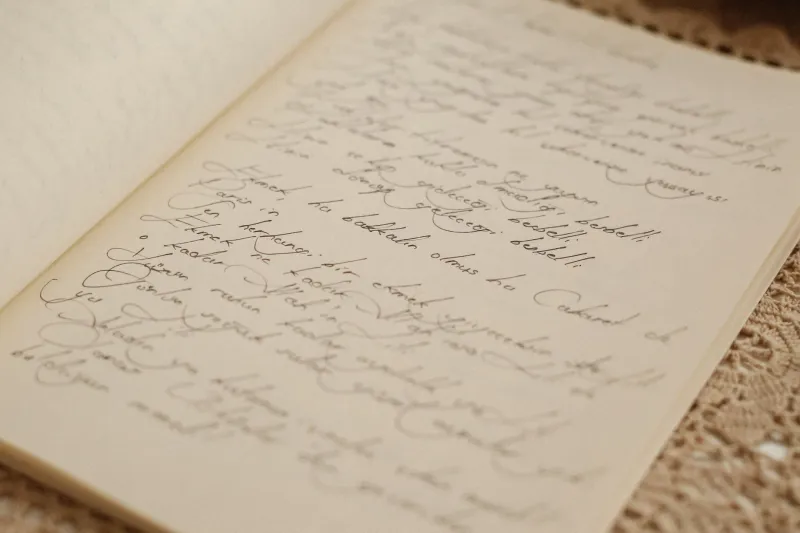
There is a particular kind of vertigo that multilingual poets describe when it happens for the first time. A line arrives — fully formed, rhythmically alive, emotionally precise — and it arrives in the wrong language. Wrong, that is, by every conventional measure: not the language of their schooling, not the one listed on their résumé, not the one their writing group expects. It is the language of a grandmother's kitchen, a neighborhood they grew up beside, a lover they once had, a country they passed through for three weeks at twenty-two. And yet, inexplicably, it is the truest thing they have written in years.
This is the polyglot's dilemma, and it is far more common than the literary world tends to acknowledge.
The Gap Between Competence and Candor
Conventional thinking about multilingual writing tends to organize itself around a hierarchy: the poet writes best in the language they know most thoroughly. Grammar, vocabulary, idiomatic range — these are treated as the foundations of craft. And in many respects, they are. Precision matters in poetry, perhaps more than in any other form.
But precision is not the same as intimacy. And it is intimacy — the sense that a word has been worn smooth by personal use, that a phrase carries the specific weight of a particular life — that gives poetry its capacity to move a reader.
Several poets interviewed for this piece described a recurring phenomenon: the languages they speak most fluently have become, in a sense, too familiar. Years of academic study, professional use, or careful literary practice have built a kind of protective distance between the writer and the raw material of feeling. The rules are too well-known. The self-editing begins too quickly.
A language learned casually — through a Puerto Rican neighbor in a Chicago apartment building, through years of watching telenovelas, through a grandmother who code-switched without warning — carries a different charge. It is a language known emotionally before it was known grammatically. The errors in it are not embarrassing; they are intimate. They are, in some cases, the very quality that makes the poem breathe.
Learned Sideways, Written Deeply
Marcela Fuentes, a poet based in San Antonio who grew up speaking English at school and absorbing Spanish through family gatherings she was never quite fluent enough to fully join, describes her relationship to Spanish as "inherited but unearned." For years, she wrote exclusively in English. Her Spanish, she reasoned, was not good enough for serious work.
Then, during a period of personal grief, a poem came to her in Spanish. Not polished Spanish. Not the Spanish of García Lorca or Pablo Neruda. The Spanish of her late aunt, clipped and warm and full of regional expressions that do not appear in any dictionary. She published it anyway, errors intact, and received more correspondence about that single poem than about anything she had written in the previous decade.
"People kept saying it felt real," she recalls. "I think what they meant was that it felt unguarded. I didn't have the fluency to be guarded in that language. The poem came out the way grief actually feels — incomplete, searching, not quite in control of itself."
Her experience is not singular. Across the United States, a country whose linguistic landscape is among the most complex in the world, poets are increasingly writing in languages they absorbed through cultural osmosis rather than formal instruction. Vietnamese-American writers in Orange County. Haitian Creole speakers in Miami whose relationship to standard French is mediated through family history rather than classroom hours. Second-generation Korean Americans who know enough of their heritage language to feel its emotional textures but not enough to parse its grammar with confidence.
The Question of Authority
The discomfort, of course, is real. Writing in a language one does not officially command raises legitimate questions — about cultural appropriation, about authenticity, about the responsibility a writer holds toward a linguistic community they may only partially belong to.
These questions deserve serious consideration, and they are distinct from the creative phenomenon this article examines. There is a meaningful difference between a poet writing in a language that is genuinely part of their personal and familial history — however imperfectly acquired — and one who adopts another culture's tongue as an aesthetic gesture from the outside. The former is a matter of honest self-expression under complicated circumstances. The latter is a different conversation entirely.
For poets navigating this territory from within their own heritage, the challenge is often internal: overcoming the shame of imperfect acquisition, the sense that one is not qualified to speak in a language that belongs, in some essential way, to one's own family. Literary scholar and poet Adriana Ramírez, who teaches creative writing at the University of Pittsburgh, frames it this way: "Many of my students feel they have to earn the right to write in their heritage language by becoming fluent first. But fluency is not the same as belonging. And belonging is what poetry requires."
Practical Guidance for the Uncertain Multilingual Poet
For poets who find themselves drawn to write in a language they do not formally command, a few principles have emerged from practitioners who have navigated this terrain.
Follow the image, not the grammar. When a phrase arrives in an unexpected language, resist the urge to immediately translate it into a language you trust more. Write it down as it came. The grammatical roughness may be carrying something essential about the emotional state that produced it.
Let a native speaker read it — but not to correct it. Sharing the work with someone for whom the language is primary is valuable, but the goal of that exchange should be understanding, not standardization. Ask whether the poem communicates. Do not ask whether it is technically correct.
Consider publishing with transparency. Some poets choose to include a brief note about their relationship to the language in which a poem is written. This is not an apology; it is context. It invites the reader into the specific circumstances of the poem's creation.
Resist the urge to over-explain the gaps. A poem written in imperfect Spanish does not need a footnote explaining that the writer's Spanish is imperfect. The poem itself will convey its relationship to the language. Trust it.
When the Language Chooses You
There is a phrase in several Romance languages — and variations of it exist in languages far beyond that family — that describes the experience of a thought arriving fully formed, as if from outside oneself. Poets across traditions have reached for this idea to describe the creative act at its most uncanny: the sense that the poem is not composed so much as received.
The polyglot's dilemma may be, in its most generous interpretation, simply a particularly vivid version of this experience. The poem arrives in a language that surprises you. It does so, perhaps, because that language holds a part of your experience that your primary tongue has never been asked to carry. It arrives untranslated because translation would cost it something it cannot afford to lose.
At Poezia, we believe that every language finds its song — and sometimes, that song finds its singer in the most unexpected register. The poet who writes in a language they barely speak may be doing something more honest than the one who reaches only for the tools they have fully mastered. They are writing at the edge of what they know, which is, in the end, where the most interesting poems tend to live.