When Sound Becomes Color: Multilingual Poets and the Art of Sensory Alchemy
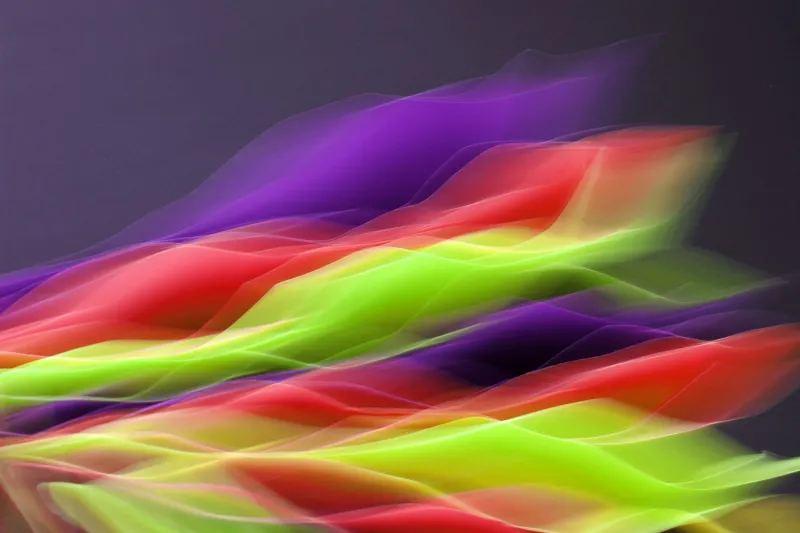
There is a moment, familiar to certain poets, when a word stops being a word. It becomes instead a wash of amber light, a pressure behind the sternum, or the specific blue of a late-winter sky just before snowfall. This is the territory of synesthesia — the neurological crosswiring of sensory channels — and for a growing number of multilingual poets working in the United States today, it represents not a curiosity but a compositional tool of extraordinary power.
What makes this phenomenon particularly rich for those who write across languages is the discovery that the same concept, rendered in different tongues, does not produce the same sensory signature. The Portuguese word saudade — that untranslatable ache of longing — arrives to some synesthetic writers as a deep violet, almost bruised. Its nearest Mandarin cousin, a kind of homesickness embedded in xiāngchóu, may surface instead as something golden and dusty, like afternoon light on an old photograph. Same emotional territory. Entirely different interior weather.
The Neuroscience Behind the Verse
Synesthesia affects an estimated three to four percent of the general population, though researchers at institutions including MIT and the University of California San Diego have noted that the condition may appear at higher rates among individuals who work extensively with language and sound. Among poets — already a population attuned to the sonic texture of words — the incidence may be even more pronounced.
For multilingual synesthetes, each language functions as a distinct palette. The phonetic architecture of a language shapes the sensory associations it triggers. Languages rich in open vowels, like Italian or Brazilian Portuguese, tend to produce what several poets describe as expansive, luminous impressions. Languages with dense consonant clusters or tonal distinctions, such as Mandarin or Vietnamese, often generate more geometric, structured visual responses — grids of color rather than washes, sharp edges rather than gradients.
This is not merely metaphor. Neuroimaging studies have confirmed that, in genuine synesthetes, sensory cross-activation produces measurable activity in brain regions not typically engaged by the stimulus in question. When a synesthetic poet hears the phoneme at the heart of a particular word, the visual cortex may genuinely respond.
Writing at the Intersection of Senses
For poets who experience this phenomenon, the craft question becomes: how do you translate an interior sensory event — one that is, by definition, private and largely incommunicable — into language that a reader without synesthesia can feel?
The answer, many of these writers suggest, lies in strategic indirection. Rather than announcing a color, they build the conditions for a reader to arrive at one independently. Rather than naming a sensation, they construct the poem's sonic environment so that the sound itself does part of the work.
Consider the deliberate deployment of phonetic texture. A poet who perceives the letter l as silver — a common synesthetic association — might cluster l sounds at the precise moment in a poem where silver light is thematically relevant, allowing the sound and the image to reinforce each other at a frequency below conscious recognition. The reader may not know why the line feels luminous. The poet does.
This technique becomes considerably more complex, and more interesting, when the poem moves between languages. A line that pivots from English into Spanish, for instance, does not simply shift vocabulary. For the synesthetic poet, it shifts the entire sensory register of the piece — the way a film composer might modulate from a major to a minor key to signal an emotional transition the audience feels before they can name it.
Portraits of Practice
Several contemporary poets based in the United States have spoken openly about the role synesthesia plays in their multilingual work.
One poet, who writes in English, Tagalog, and Ilocano, describes the experience of composing in her ancestral languages as moving into a different room of the same house — familiar in structure but differently lit. Tagalog, she explains, arrives to her in warm earth tones, ochre and terracotta, while Ilocano — a language she associates with her grandmother's voice and the particular landscape of northern Luzon — registers as a cooler, greener presence, something almost marine. English, the language of her formal education and professional life, tends toward gray-blue, precise and slightly cold. Her poems, she says, are partly exercises in color theory: finding the moment where the palettes of three languages can coexist on the same page without canceling each other out.
Another poet, working across English and Arabic, describes Arabic's classical registers as producing what she calls "architectural gold" — heavy, formal, and load-bearing in a way that shapes the visual field around it. When she moves into the more colloquial Arabic of her family's spoken dialect, the gold softens into something more like brass, warmer and more domestic. The shift between registers within a single language, she notes, can produce as dramatic a sensory change as the shift between two entirely different tongues.
A third writer, whose practice spans English, Haitian Creole, and French, has spoken about the way Creole's phonetic blending — its capacity to hold French structure and West African tonal memory simultaneously — produces a sensory experience he describes as layered transparency, like sheets of colored glass stacked at slightly different angles. French alone reads to him as flat and cool; English as textured and gray. But Creole, he suggests, is the only language in which he experiences what he calls "depth of field" — the sense that the color has dimension, that it exists in space rather than simply on a surface.
The Page as Sensory Score
What these poets share is an understanding of the poem as something more than a semantic delivery system. For them, the page functions as a kind of sensory score — a set of instructions for producing an interior experience that operates beneath and alongside meaning.
This is, of course, what the best poetry has always aspired to. From Gerard Manley Hopkins's "sprung rhythm" to Lucille Clifton's spare, percussion-driven lines, poets have long understood that sound is not decoration but structure. What the multilingual synesthetic poet adds to this tradition is a heightened awareness of how radically that structure can shift across languages — and a willingness to exploit those shifts as compositional strategy.
For readers, the invitation is to pay closer attention to what a poem sounds like before — or alongside — attending to what it means. To ask not only what a line is saying but what color it is, what temperature, what texture against the fingertips.
That question may not yield the same answer for every reader. But the asking of it opens a door that purely semantic reading keeps firmly closed — a door into the part of language that has always been music, and the part of music that has always been light.
At Poezia, we believe that poetry's power resides precisely in this excess — in everything a poem carries that cannot be fully accounted for by its words alone. For the multilingual poets who hear color and see sound, that excess is not a mystery to be solved. It is the whole point.