Voices You Already Know: How Poetry Awakens the Languages Hidden Inside You
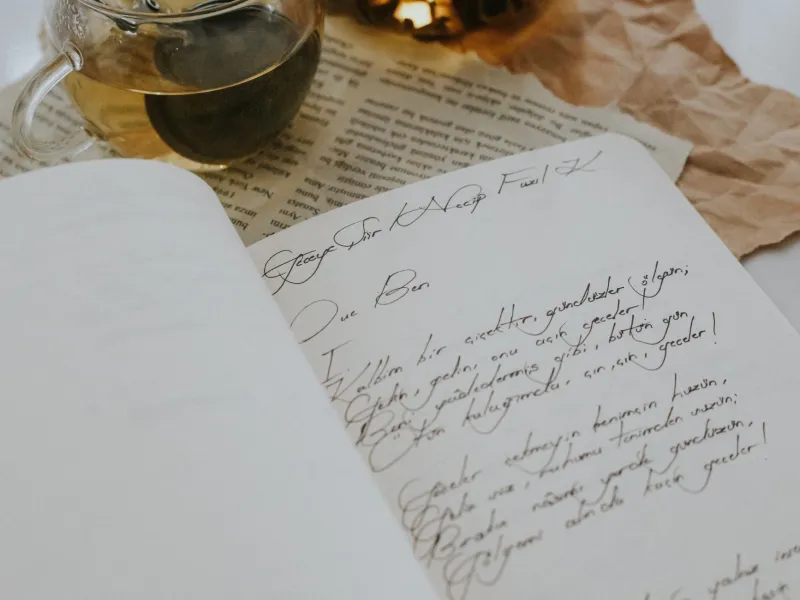
Something unusual happens when Maria Delgado reads the poems her late grandmother left behind in a worn notebook. The verses are written in Spanish—specifically, a regional Castilian dialect that Maria, who grew up speaking mostly English in suburban Phoenix, Arizona, never formally studied. Yet when she reads aloud, the cadences feel less like foreign syllables and more like a melody she once knew and nearly forgot.
"I don't understand every word," Maria admits. "But I understand the feeling. And somehow, the feeling teaches me the words."
Hers is not an isolated experience. Across the country, readers and writers are discovering that poetry operates as a peculiar kind of linguistic key—one capable of opening chambers of language that conventional instruction never reaches. The phenomenon, which linguists sometimes describe as receptive competence, suggests that human beings absorb far more language than they consciously register, and that poetry, with its heightened attention to sound, rhythm, and emotional resonance, is uniquely positioned to release what has quietly accumulated.
The Inheritance Hiding in Verse
For the children and grandchildren of immigrants, a grandparent's poem can function as something more profound than a family artifact. It becomes a portal. The language of those verses—whether Tagalog, Haitian Creole, Yiddish, or Cantonese—may have been spoken in the home during early childhood, absorbed through daily proximity before formal schooling in English took precedence. Years later, encountering that language again through poetry rather than grammar textbooks can produce an almost physical sense of recognition.
Dr. Ananya Krishnan, a sociolinguist at a research university in the Pacific Northwest, has spent years documenting what she calls heritage language reactivation in second- and third-generation immigrant communities. Her findings suggest that poetry is disproportionately effective as a reactivation tool precisely because it engages the brain's emotional and musical processing systems simultaneously.
"Poetry is not how we learn language in classrooms," Dr. Krishnan explains. "It is how we first experienced language as infants—through rhythm, repetition, and emotional tone. When adults encounter a heritage language through verse, they are, in a very real sense, returning to the cognitive conditions under which they first absorbed that language."
This insight carries considerable weight for a country as linguistically diverse as the United States, where an estimated 67 million people speak a language other than English at home, and where countless millions more carry dormant knowledge of ancestral tongues.
Accent, Cadence, and the Body's Memory
The linguistic awakening that poetry enables is not limited to heritage languages. Devoted readers of poetry in translation—or readers who return obsessively to a beloved poet writing in a second language—frequently report absorbing not just vocabulary but something more elusive: the music of an unfamiliar tongue.
James Whitfield, a high school English teacher in rural Vermont, became entranced by the Spanish-language poetry of Pablo Neruda in his late twenties. He had studied Spanish briefly in college and retained little of it. But he began reading Neruda's original texts alongside English translations, listening to recorded recitations, and attempting to mimic the phonetic patterns he heard. Within two years, he found himself capable of reading contemporary Chilean poets with genuine comprehension.
"I never conjugated a verb in a workbook," James says. "I just fell in love with how the language sounded inside those poems. The grammar came later, almost as an afterthought."
What James describes aligns with what researchers in the field of phonological priming have long understood: repeated exposure to the sound patterns of a language, particularly in emotionally charged contexts, accelerates the brain's ability to segment and interpret speech. Poetry, with its concentrated attention to sonic texture, provides exactly that kind of charged exposure.
Emotional Registers as a Form of Fluency
Perhaps the most striking dimension of poetry's linguistic power is its capacity to confer fluency not in a formal language but in an emotional register—a way of feeling and articulating experience that transcends vocabulary.
Readers who have spent years immersed in the confessional tradition of American poetry, for instance, often describe acquiring a new relationship to their own interior lives: a vocabulary of vulnerability, precision, and self-disclosure that reshapes how they communicate with others. Those who have devoted themselves to the spare, imagistic verse of East Asian poetic traditions—haiku, Tang Dynasty poetry in translation, the work of contemporary Korean poets—frequently report developing a heightened sensitivity to what is left unsaid, an attunement to silence and implication that alters their perceptions well beyond the page.
"Poetry gave me a language for grief that English alone never offered me," says Priya Nair, a software engineer in the San Francisco Bay Area who began reading Tamil devotional poetry following her mother's death. "I didn't just find words. I found a whole way of holding loss."
This is, in a sense, the most intimate form of linguistic discovery: not the acquisition of a new tongue but the recognition of an emotional vocabulary already present within an existing one, waiting to be named.
Poetry as Passport
For educators and language advocates, these testimonies carry practical implications. A growing number of heritage language programs at American universities are incorporating poetry—both canonical and contemporary—as a primary instructional tool rather than a supplementary enrichment activity. The results, according to several program directors, have been encouraging: students who engage with poetry in a heritage language demonstrate faster progress in reading comprehension and greater long-term retention than those who follow exclusively grammar-based curricula.
The platform model itself matters, too. Online communities organized around multilingual poetry—where readers encounter verse in multiple languages simultaneously, often accompanied by audio recordings and community commentary—appear to accelerate the kind of receptive learning that Maria Delgado and James Whitfield describe. The social dimension of poetic engagement, the act of sharing, discussing, and performing verse within a community, amplifies what solitary reading begins.
What the Poem Already Knows
There is something quietly radical in the idea that language learning need not begin with a textbook, a classroom, or even a conscious intention to learn. That a poem—read at the kitchen table, discovered in a grandparent's drawer, encountered by accident on a late-night internet search—might be the truest gateway to a language one already, in some deep sense, possesses.
For Maria Delgado, the notebook of her grandmother's poems has become something she returns to regularly, not as a study exercise but as a conversation across time. Her Spanish is imperfect, she insists—halting in grammar, uneven in vocabulary. But the emotional terrain her grandmother mapped in those verses? That, Maria says, she has always known how to navigate.
"She wrote about longing for a place she left behind," Maria reflects. "I may not have the words for everything she felt. But I know exactly what she meant."
In that knowing—partial, intuitive, and profound—lies the particular gift that poetry offers to language: not instruction, but recognition. Not acquisition, but return.